
Blog
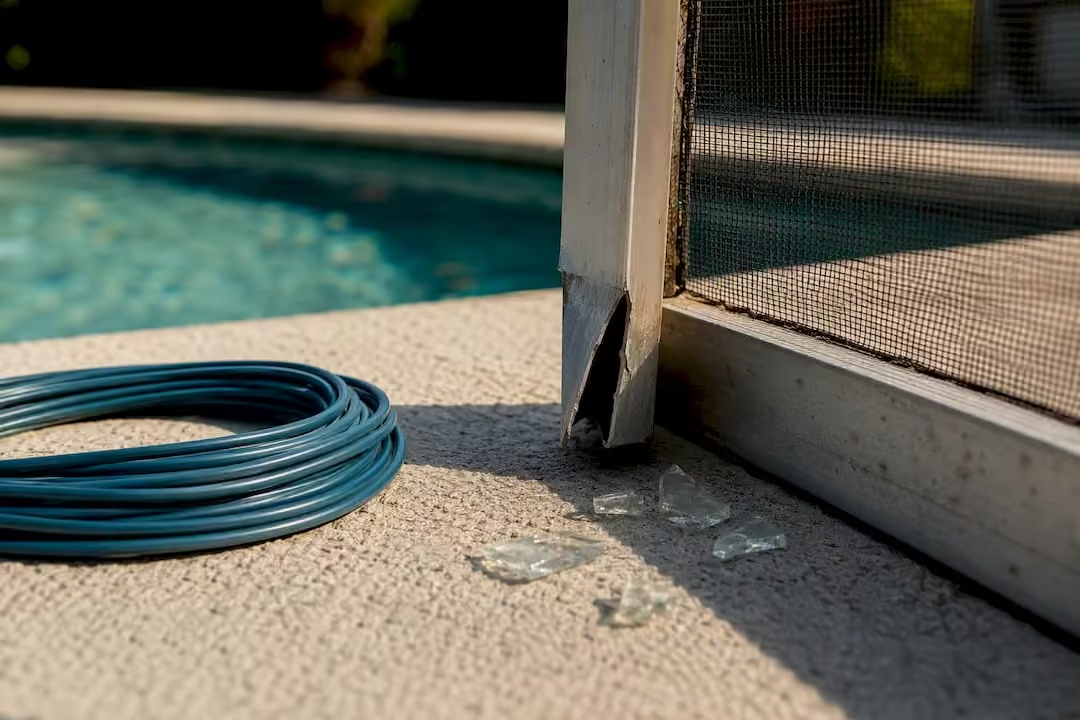
4 Pool Cage Safety Risks Homeowners Must Fix Before Storms
A pool cage cuts down on debris, bugs, and some fall hazards, but a neglected or noncompliant enclosure creates its own dangers: unsecured gates, drain entrapment, corroded frames, and torn screens that no longer block access. Fix loose latches and drain covers now, inspect the frame base for corrosion or sagging, and schedule repairs before storm season tests every weak point.
Get a Free Estimate or call 407-250-1838
TL;DR:
Mr. Pool Screen
Restore Your Pool Cage Before Storms
Mr. Pool Screen restores aging enclosures affected by weathering, rust, and deterioration, helping protect safety and outdoor appeal without a full rebuild.
Table of Contents
- What Are the Main Pool Cage Safety Risks?
- How Do Enclosures Fit Into Layered Pool Protection?
- Inspection Checklist for Structural and Cosmetic Wear
- What Codes and Standards Apply to Pool Enclosures?
- Building a Practical Maintenance and Repair Schedule
- Common Injury Hazards Hiding in Plain Sight
- Safety Equipment and Modifications Worth Adding
- What Legal Responsibilities Do Homeowners Have?
- Environmental Risks That Compromise Cage Safety
- Why Timely Restoration Protects More Than Your Wallet
- Sources
- FAQ
What Are the Main Pool Cage Safety Risks?
The biggest risk isn’t the cage itself. It’s what happens when the cage stops doing its job. Four hazards show up again and again in inspection reports and insurance claims.
- Unauthorized access and drowning pathways. Gates propped open, patio furniture stacked against the screen wall, or a torn panel near ground level all give a small child a way in. Drowning is the leading cause of injury-related death in young children, and more than half of those deaths happen in swimming pools, not lakes or oceans.
- Drain entrapment. A cage does nothing to stop suction entrapment. Missing or cracked drain covers remain a documented hazard, which is exactly why the Virginia Graeme Baker Pool and Spa Safety Act pushed for anti-entrapment drain devices nationwide.
- Slip and fall hazards. When screens tear or sag, leaves and algae blow in, turning a dry deck slick within days.
- Storm-related failures. High wind can blow out panels, bend frames, and loosen anchors in minutes, removing the barrier function exactly when a distracted household needs it most.
How Do Enclosures Fit Into Layered Pool Protection?
A pool cage is one layer in a stack of protections, never the whole system. CPSC’s own drowning data shows 69% of young children who drowned were not expected to be near water at the time. That statistic alone should end any debate about relying on a single barrier.
What actually matters in a cage’s barrier function:
- Gate height and self-closing behavior. A gate that swings open on its own or sticks halfway isn’t doing its job.
- Latch placement out of small hands’ reach. Latches mounted low enough for a toddler to reach defeat the purpose.
- No climbable objects nearby. Grills, pool toys, or patio chairs stacked near the screen wall turn a six-foot enclosure into a two-foot one.
Run a simple gate test monthly: push it shut from three feet away and confirm it latches without help. Check latch height against a yardstick, not a guess. Walk the perimeter and remove anything a four-year-old could climb. None of this replaces four-sided fencing, door alarms, or active supervision. It supplements them.
Inspection Checklist for Structural and Cosmetic Wear
White, chalky oxidation on aluminum framing and rust bleeding from screws look cosmetic. They rarely stay that way. Left alone, oxidation eats into the metal’s structural capacity, and a fastener that’s rusted through can no longer hold the frame to the slab the way it should.
A homeowner walkthrough should cover:
- Frame bases and beam connections for pitting, cracking, or visible gaps at the joints
- Fastener condition, especially anywhere you see rust streaks running down the screen
- Door hardware, including hinges and self-latching mechanisms
- Screen tension. If mesh sags or flaps in light wind, the spline holding it is likely failing
- Roof panels for standing debris that adds unplanned weight load
- Anchor points at the slab, where base-plate pitting signals wind loads are no longer transferring safely to the concrete
Pro Tip: Photograph your enclosure’s frame joints and fasteners every spring. Side-by-side photos from year to year make it obvious when oxidation is spreading, long before it becomes a visible sag.
Most enclosures need rescreening somewhere between seven and ten years, sooner in coastal or heavily shaded yards. Fastener replacement with stainless steel or Nylotech hardware, water-based acrylic coatings on the frame, and professional rescreening restore both the barrier function and the look of the enclosure at a fraction of rebuild cost.
What Codes and Standards Apply to Pool Enclosures?
A screen enclosure only counts as a legal pool barrier when it actually meets the applicable code, and that trips up more homeowners than you’d expect. Common requirements homeowners run into:
- Minimum barrier height, typically measured from grade to the top rail
- Gates that are self-closing and self-latching, with no manual override left engaged
- Latch height set above a child’s reach line
- Anti-entrapment drain covers meeting ASTM/ANSI standards, tied back to the VGB Act framework
Florida’s own statute language treats a pool screen enclosure as a barrier only when it meets specific dimensional and hardware criteria. A torn panel, a propped gate, or an altered latch height can invalidate that compliance overnight, even if the rest of the structure looks fine. Inspectors commonly flag missing self-latching hardware and gaps at the base of the screen wall first.
Check your own status by pulling permit records from your local building department, requesting past inspection reports, or asking a contractor for a quick engineering review before you assume the cage alone satisfies code.
Building a Practical Maintenance and Repair Schedule
Most enclosure failures aren’t sudden. They’re the result of small things nobody got around to fixing.
- Monthly: Rinse screens to clear salt, pollen, and debris buildup before it stains or weakens the mesh.
- Twice a year: Check hardware, gate latches, hinges, and door alarms for function, not just presence.
- Annually: Walk the full structure using the inspection checklist above, checking fasteners, frame bases, and screen tension.
- Every 7 to 10 years: Plan for rescreening, sooner in coastal or high-sun exposure areas.
Homeowners can safely tighten loose screws, clear roof debris, and test gates and alarms themselves. Leave frame realignment, welding, or anchor repair to a professional. That’s a structural call, not a weekend project.
After any storm, photograph damage before touching anything, for insurance purposes. Secure loose panels so they don’t become flying debris in a follow-up gust, and check anchor points at the slab for movement.
Pro Tip: Keep dated photos of your enclosure in a phone folder year over year. If you ever file an insurance claim, that timeline is worth more than any verbal description of “recent” damage.
If damage is cosmetic or limited to a handful of panels, restoration usually wins on cost. If more than a third of the structure shows corrosion or frame failure, get a rebuild estimate before committing to patchwork repairs.
Common Injury Hazards Hiding in Plain Sight
Beyond drowning and entrapment, pool cages carry everyday injury risks that rarely make headlines but send people to urgent care.
Sharp edges are the most common. Cut or bent screen frame edges, exposed fastener heads, and broken kickplate corners cause lacerations, especially to bare feet. Glass breakage is a real concern too, mainly around sliding doors or windows built into the enclosure wall, where impact from a dropped pool toy or a stray branch can shatter tempered glass into a hazard zone right at ground level.
Fall risks come from an unlikely source: the deck surface itself, not the screen. Once an enclosure’s mesh degrades, sun exposure and standing moisture accelerate algae growth on the deck below, and a slick deck around a pool edge is a fall risk independent of the water. Pairing enclosure repairs with a non-slip pool deck coating addresses that risk directly rather than hoping the screen alone keeps water off the surface.
Frame collapse under wind load is rarer but far more serious, since a falling aluminum beam or screen panel can strike someone standing beneath it. Regular fastener and beam-connection checks catch this risk long before it becomes a falling hazard, which is exactly why inspection frequency matters more than most homeowners assume.
Safety Equipment and Modifications Worth Adding
A well-maintained cage handles a lot, but specific add-ons close the remaining gaps.
Door and gate alarms rank among the highest-value additions. CDC guidance specifically recommends door alarms alongside four-sided fencing as one of the few interventions with a track record of catching unsupervised entry before it becomes an emergency.
Impact-resistant or heavier-gauge screen mesh costs more upfront but resists tearing from wind-driven debris and pet claws, which matters most in storm-prone regions where lighter mesh fails first. Self-latching gate hardware retrofits are a cheap fix for older enclosures built before self-closing gates became standard in most codes.
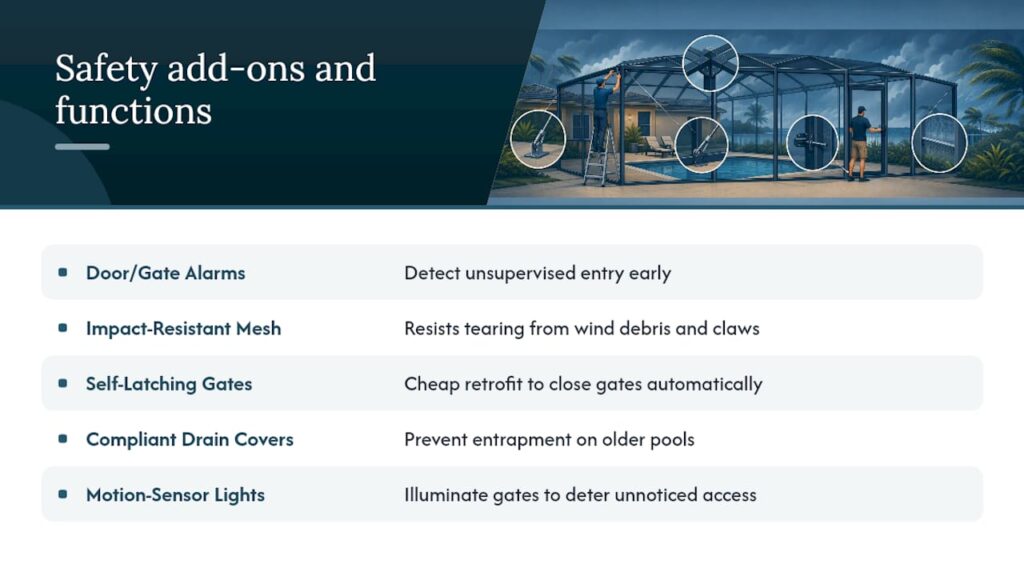
Anti-entrapment drain covers deserve a direct mention here too, separate from the enclosure entirely. If your pool predates the VGB Act’s push for compliant drain covers, replacing them is a safety upgrade that has nothing to do with the screen structure but everything to do with overall pool safety.
Motion-sensor lighting around gate entry points helps at night, when most unsupervised access incidents go unnoticed until it’s too late. None of these replace supervision. They buy reaction time, which is often the entire difference in a pool emergency.
What Legal Responsibilities Do Homeowners Have?
Homeowners typically carry direct liability for pool-related injuries on their property, and a deteriorating enclosure doesn’t reduce that exposure. It usually increases it.
If your screen enclosure is legally serving as your primary pool barrier and it fails to meet code, whether from a propped-open gate, a missing self-latch, or a torn panel at ground level, you may be found negligent in the event of an accident, regardless of intent. Homeowner’s insurance policies often require documented maintenance or specific barrier compliance as a condition of coverage, so a claim filed after an incident involving a known, unrepaired hazard can be denied.
Renters and multi-family property owners face a similar standard: whoever controls access to the pool area generally bears responsibility for keeping the barrier functional. That includes prompt repair of gate hardware and latch height, not just eventual repair.
Documentation matters more than most homeowners realize. Dated photos, contractor invoices, and permit records showing your enclosure met code at the time of installation and has been maintained since can be the difference between a covered claim and a costly legal dispute. Keep them, and update them every time you have work done.
Environmental Risks That Compromise Cage Safety
Weather does more damage to pool enclosures than everyday wear does, and it does it fast.
Windstorm damage is the most dramatic. A single strong gust can bend aluminum framing, blow out entire screen panels, or rip anchors loose from the slab, all in the time it takes to notice the sky darkening. Homes in coastal or open-lot areas see this more often, since there’s nothing to break the wind before it hits the enclosure broadside.
Debris accumulation causes slower, quieter damage. Leaves, pine needles, and seed pods that collect on the roof panels add weight the structure wasn’t necessarily designed to hold indefinitely, and trapped moisture underneath accelerates rust at fastener points you can’t see from the ground. Salt air compounds all of this along the coast, where oxidation on aluminum framing moves noticeably faster than it does inland.
Heavy rain exposes weaknesses that dry weather hides. Standing water at the base track or pooling on sagging screen sections signals drainage or tension problems that will only get worse with the next storm. None of these risks are avoidable entirely, but a homeowner who inspects after every major weather event, not just once a year, catches small failures before they become a code violation or a personal injury claim.
Summer lightning, afternoon thunderstorms and the June-to-November hurricane season put real stress on cages across Orlando, Winter Garden and Altamonte Springs, so safety checks are worth timing around them.
Why Timely Restoration Protects More Than Your Wallet
The mistake I see homeowners make most often isn’t ignorance. It’s optimism. They notice the white chalky film on the frame or a small tear in the screen and assume it’s cosmetic, something to deal with next year. That assumption is exactly backwards. Cosmetic wear on a pool cage is almost always the visible edge of a structural problem that’s already underway.
The homeowners who fare best treat oxidation and small tears as a deadline, not a suggestion. A fastener replaced this year with stainless steel or Nylotech hardware is a fastener that won’t fail during next year’s storm season. A frame recoated before the metal pits is a frame that keeps transferring wind load to the slab the way it’s supposed to. Restoration done early isn’t just cheaper than a rebuild. It’s the difference between a barrier that still functions and one that only looks like it does.
— Michel
Get a Free Estimate or call 407-250-1838
Sources
- PoolSafely / CPSC annual drowning report and guidance (PoolSafely blog)
- CPSC guidance on pool and spa safety, including VGB Act context
- StatPearls / NCBI: Pool safety (drowning statistics and prevention)
- CDC: What you can do to stay healthy in swimming pools
If your enclosure shows any of the corrosion or fastener issues covered above, Mr. Pool Screen’s restoration services address frame coating, fastener replacement, and rescreening for aging Central Florida pool cages, often at a fraction of rebuild cost. Browse the project gallery for before-and-after examples, or start with Mr. Pool Screen’s homepage if you’re not sure whether restoration or replacement fits your situation.
FAQ
What Are the Pros and Cons of a Pool Cage?
Pool cages cut down on debris, insects, and UV exposure while adding a partial physical barrier around the pool. The trade-off is upkeep: screens tear, frames oxidize, and fasteners corrode over time, especially in coastal or storm-exposed areas, so the enclosure needs regular inspection to keep functioning as intended.
What Is the Average Lifespan of a Pool Cage?
The aluminum frame itself can last decades with proper maintenance, but screen mesh typically needs replacing every 7 to 10 years, sooner in coastal or heavily sun-exposed yards where oxidation and UV damage accelerate wear.
Is a Pool Cage Necessary in Florida?
It’s not universally required by law, but a compliant screen enclosure can serve as a legal pool barrier under Florida’s residential pool barrier statute if it meets specific height, gap, and gate hardware requirements. A damaged or noncompliant cage doesn’t count.
Does a Pool Cage Add Value to a Home?
A well-maintained enclosure generally supports home value by protecting the pool and deck from debris and weathering, while a visibly deteriorating cage with rust stains or torn screens can hurt curb appeal and raise buyer concerns during inspection.